How Online Games Learned to Sound Real
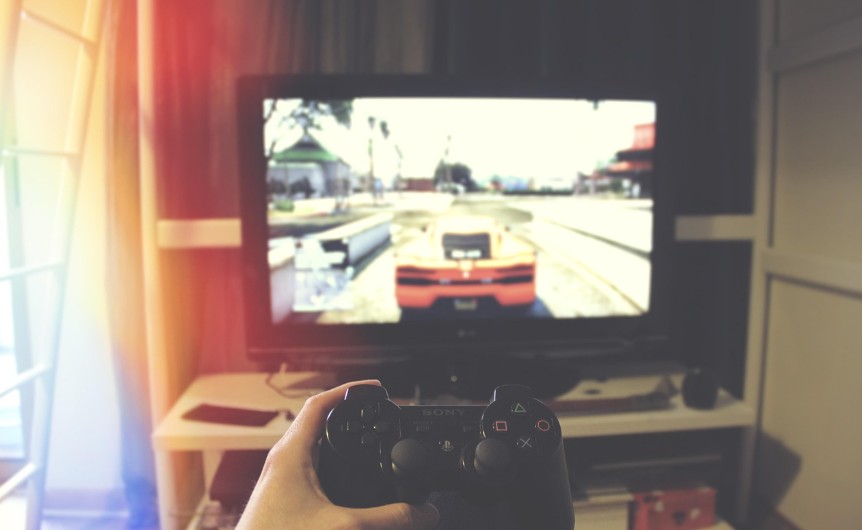
Ever opened a browser game that looks fine but somehow feels fake? The wheels seem to slide instead of grip. A metal lever moves without weight. A button lands just after your finger. Nothing is visibly broken, yet the game feels artificial.
Now try the opposite: modest visuals, but a motor rises under load, a latch gives a dry metallic click, footsteps change on different surfaces, and the room seems to extend beyond your headphones. The second game can feel more believable.
Sound is often the last thing players credit and the first thing that breaks immersion. To understand why some online games feel convincing, listen for four things: material, variation, space, and timing.
From Simple Cues to Responsive Sound
Put a MIDI-era browser game beside a modern one, and the difference is not simply sample quality. Older designs often communicated with a small set of short, repeated cues. Modern game audio can behave more like a system.
That evolution happened in stages. Early games relied heavily on short electronic cues and tightly limited sound libraries. As storage and processing improved, designers moved toward recorded samples, then layered systems in which several sounds could respond to the same action.
Some games go further by modelling parts of the behaviour itself, allowing engine load, friction, impact force, speed, or surface type to reshape what the player hears in real time.
The Web Audio API gives web applications a graph-based way to process and synthesise audio in real time. Sound can therefore react to speed, position, collisions, and player input instead of behaving only like a fixed file that starts and stops.
The design question has changed from “Which sound should play?” to “How should this sound behave right now?”
Foley Gives Virtual Objects Weight
Realism often begins with ordinary physical objects.
Foley artists record materials so gaming designers have convincing textures to shape. Sound-effects sessions built around everyday objects, doors, floors, weapons, and different surfaces.
The recorded object does not always need to match the object on screen. What matters is capturing the right scrape, snap, friction, or weight.
That becomes important because players hear cause and effect repeatedly. A wooden drawer should not sound like a plastic button. A heavy mechanism may need several tiny events: contact, resistance, release, and settle.
Consider a browser-based Roulette Simulator. The visual action can be geometrically simple, but the mechanical impression depends on small sonic events: the initial spin, the rolling ball, repeated contacts, deceleration, and the final impact.
If each contact is identical, the illusion quickly becomes a loop. If spacing, intensity, and texture change with the motion, the mechanism feels more physical.
Variation Stops the Ear Catching the Loop
Repeated audio is easy to notice once the pattern becomes familiar. That is why game-audio systems often use pools of related sounds rather than one file.
Random and shuffle selection, including options that limit immediate repetition. Designers can prepare several footsteps, clicks, or impacts, then introduce controlled differences in pitch, volume, or timing.
Randomising several recordings is one solution, but procedural audio can go further. Instead of choosing only between prerecorded versions, a game can alter sound according to changing parameters such as speed, force, RPM, contact angle, or surface material. Two apparently identical events can therefore produce slightly different results. The variation follows what is happening in the simulation rather than simply disguising a repeating loop.
A racing sim shows why this matters.
An engine should not sound like one recording being stretched upward. Its character can combine:
- Combustion
- Air intake
- Transmission
- Tyre noise
- Wind
- Road surface
Spatial Audio Creates Invisible Geometry
A small screen can still suggest a large acoustic space.
Spatial mixing uses direction, distance, and the relationship between a source and listener to shape what reaches the ears. Wwise Spatial Audio, for example, can model reflection, diffraction, transmission, and room-to-room propagation from game geometry.
In practice, a sound behind a wall should not simply become quieter. It may lose detail, arrive through an opening, or change as the player moves. Through headphones, those differences help place events beyond the flat display.
This is especially useful when graphics are simple. Sound can imply surfaces and distances the artwork never draws.
A corridor feels longer when footsteps return with changing reflections. A machine feels enclosed when its hum changes behind a panel. Audio supplies geometry the eye never receives.
Timing Can Matter More Than Fidelity
Rhythm games make this problem obvious. A beautiful drum sample is useless if it arrives late.
In a rhythm game, input, sound, animation, and the scoring window need to feel tightly aligned. A noticeable delay can make the player feel as though the game is disagreeing with the beat.
The principle travels across genres.
A collision sound that lands after a car has bounced away feels detached. A menu click that arrives late makes an interface feel sluggish. Players may call these problems “lag” or “bad controls” when the mismatch is partly auditory.
Silence Can Be an Effect
One of the strongest audio choices is sometimes removing sound.
A designer can thin the ambience just before an important result, impact, or transition. The gap creates contrast and leaves room for the next event to register.
Think of:
- The pause before a race begins
- The breath before a rhythm-game downbeat
- The final slowing movement of a mechanical simulation
A Quick Test for Convincing Game Audio
You do not need studio monitors to judge whether a game sounds believable. Headphones are enough if you listen for a few practical signals:
- Do repeated actions vary slightly, or does one sample reveal itself?
- Do different materials sound distinct when they hit, scrape, or roll?
- Does distance change more than volume?
- Do moving objects seem to occupy positions around you?
- Does audio respond closely enough to input and animation?
- Does the mix leave quiet space before important events?
- Could you understand what happened with your eyes partly off the action?
Realism Is Often Heard Before It Is Seen
A game does not need photorealistic graphics to feel believable. Its sensory clues simply need to agree.
When movement has the right sonic weight, repeated actions do not expose obvious loops, headphones suggest space beyond the screen, and feedback arrives at the right moment, simple imagery can become surprisingly convincing.
That is how online games learned to sound real: not by making every effect louder or more cinematic, but by making sound behave.
The craft sits in recorded textures, controlled variation, spatial relationships, precise timing, and deliberate silence.
Players may still praise the graphics first. Mute the game, though, and much of its reality disappears with the sound.

RenownedForSound.com’s Editor and Founder
Interviewing and reviewing the best in new music and globally recognized artists is his passion.
Over the years he has been lucky enough to review hundreds of music releases and concerts and interview artists ranging from top selling superstars like 27-time Grammy Award winner Alison Krauss, Boyz II Men, Roxette, Cyndi Lauper, Lisa Loeb, Tori Amos and iconic, late Eagles front man/songwriter, Glenn Frey through to more recent successes including Newton Faulkner, Janelle Monae and Caro Emerald.
Brendon manages and coordinates the amazing team of writers on RenownedForSound.com who are based in the UK.